
JackLab Audio Distribution, usually shortened to JAD, was a Linux distribution organized around audio and multimedia work. Its first public release belongs to the openSUSE-based recording scene of 2007. The records below explain what the project offered, what its closure notice said, and why historical references to JackLab still appear in audio discussions.
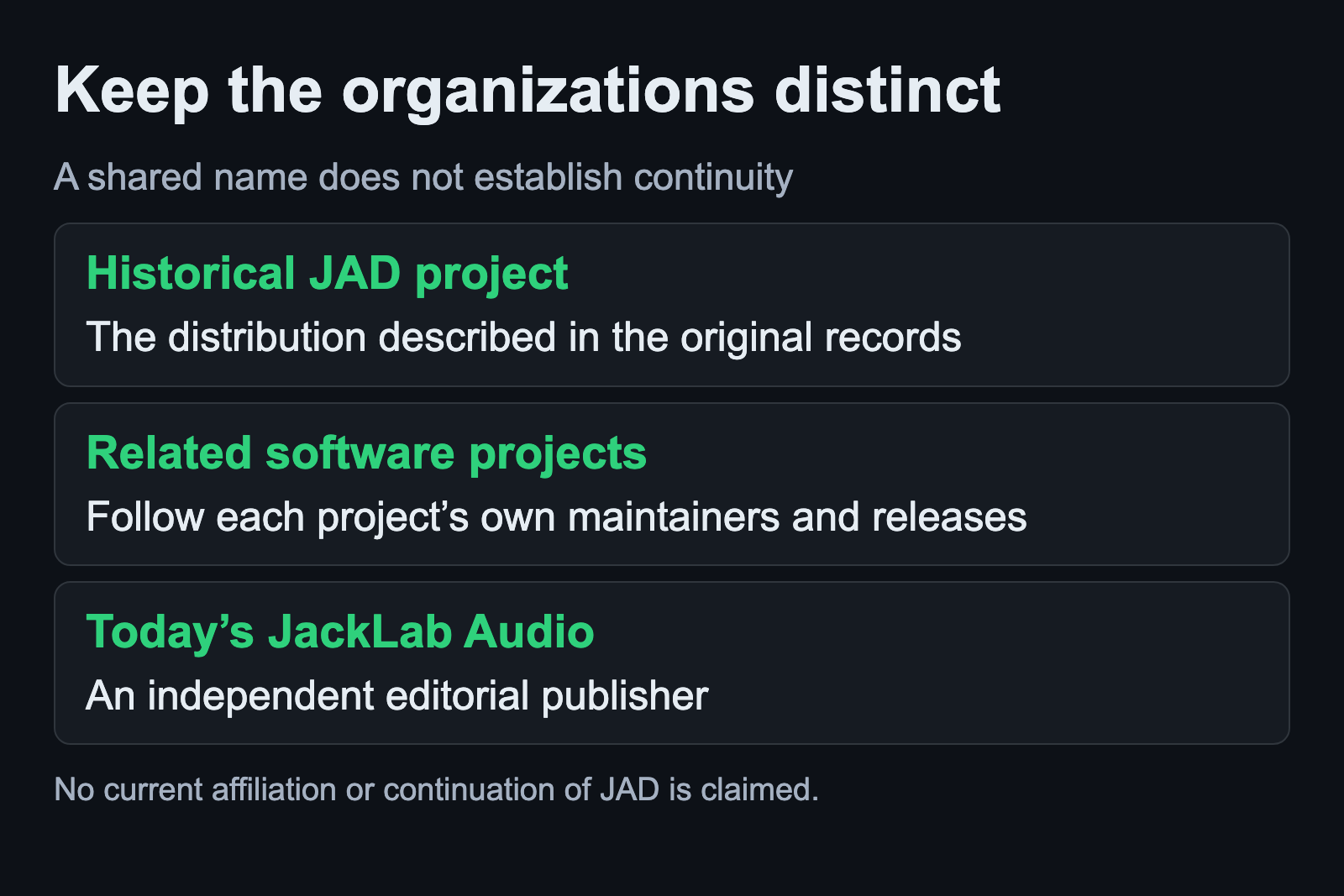
Today’s JackLab Audio is an independent editorial site. It has no affiliation with the former distribution, its maintainers, openSUSE, JACK or WineASIO. Our About page explains the current site’s identity. This article is a historical account, with version details tied to their original dates.
The first public release arrived in September 2007
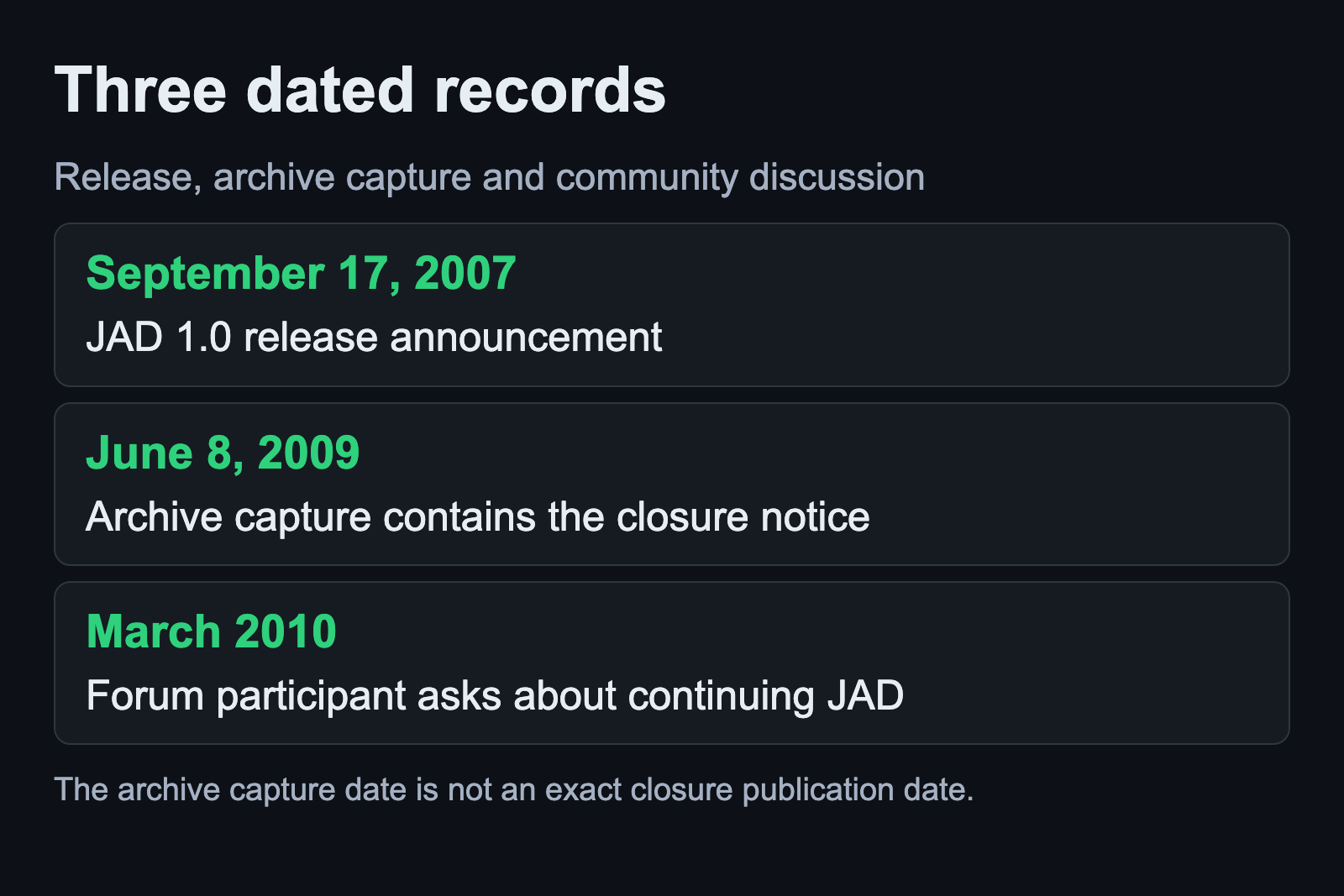
An announcement published by openSUSE News on September 17, 2007 described JAD 1.0 as a completed release after more than eight months of development. It named Oliver Bengs as technical manager and Michael Bohle as the founder of the community behind it.
The release used openSUSE 10.2, a realtime kernel and JACK. Its software selection included Ardour 2 for recording, ZynAddSubFX for synthesis and Rosegarden for MIDI sequencing. Video and graphics applications were also part of the distribution. Those are descriptions of the historical release, rather than a current software recommendation.
The announcement called the project independent from openSUSE and described collaboration around audio packages. That distinction matters when reading its name in an openSUSE publication: a base distribution, a community project and a news publisher can have different roles.
openSUSE’s December 2007 year review also listed JackLab’s first public release. It gives another contemporary reference point for the project’s appearance that year. Neither announcement supplies a count of active recording users, so this account makes no estimate of adoption.
Contemporary readers wanted a workable recording system
A February 2009 openSUSE forum question offers a small view of the audience for audio distributions. The original poster described a music project with a colleague, familiarity with Linux and limited resources for a new recording computer. Replies suggested several approaches, including JackLab and adding audio software to an existing system.
The same reader later asked about recording-interface compatibility. That follow-up is useful context: choosing a distribution did not settle the entire recording setup. It left a practical question about the equipment the musicians intended to use.
This is one discussion, not a survey. It cannot tell us how typical the reader was or which recommendation ultimately worked. It does show why a history of an audio distribution should include the recording task and the user’s hardware questions, rather than treating a package list as a complete account of the experience.
The archived site contains a closure notice
A Wayback Machine capture dated June 8, 2009 preserves a page headed “JackLab has closed.” The notice is signed by Michael Bohle. He attributes the decision to the cost of sponsoring the server, a lack of time and the absence of developers.
The notice announces that the forum, source repository and package repository will close, and that he and his friends will undertake no further development of an openSUSE-based audio distribution. It also points readers toward other places where related software or documentation could continue.
The date attached to the archive is the capture date. The page does not establish an exact publication day for the notice, and this account does not turn that timestamp into one. The distinction keeps the timeline honest: the notice was present in the captured page by that date.
Read the statement as an announcement by its author. It establishes what he said would happen, but it is not an audit of when every service stopped responding. Old web services, source repositories and community conversations need their own evidence when a more precise history is required.
Related software has its own history
WineASIO’s project changelog contains a December 1, 2007 entry recording a merge of JackLab and Robert Reif code bases. The same changelog records later work. This is a concrete connection between the historical JackLab name and software development documented elsewhere.
That connection does not make today’s JackLab Audio the maintainer of WineASIO. It also does not make the lifespan of a distribution identical to the lifespan of every program associated with it. When investigating a particular application, follow that application’s own repository and release history.
In March 2010, an openSUSE forum participant asked whether anyone was interested in continuing JAD after its closure. Other participants discussed their own recording setups. The question is evidence of continued interest; it does not establish that a new JAD release resulted.
These sources answer different questions. A changelog records software work. A forum captures what participants asked or reported. A project notice describes a decision. Combining them is useful only when each keeps its original meaning.
Use historical links according to what they preserve
If an old article brought you to this domain, first identify what it originally cited. A distribution announcement, a manual, a support thread and a download are different resources. This page explains the historical project; it does not supply an authenticated archive of its installation media or recreate its support forum.
For documentary research, keep the original URL, the archive capture date and the title of the page together. If the page names a release, retain that release number in your notes. This makes it possible for another reader to distinguish a contemporary statement from a later description of it.
For a present-day recording task, start with documentation for the system you actually run. Our beginner recording guide states its Ubuntu Studio 24.04 assumptions. Those assumptions belong to that guide, not to JAD 1.0. Old package names, repository addresses and screenshots need fresh verification before they can support modern instructions.
The AV Linux manual guide explains how to evaluate another historical documentation link. For a new installation, the current distribution selection guide starts with supported releases and a hardware trial.
What this account leaves open
This account uses a release announcement, an original closure notice, a software changelog and dated community discussions. It does not claim a complete list of contributors, every development release, an exact final service shutdown date or the number of people who used JAD professionally.
Those gaps are limits of the evidence collected here. A surviving personal recollection could add context, while a dated release record could establish another event. Either should be identified as its own source. The current publisher’s use of the domain supplies no missing evidence about the former project’s operations.